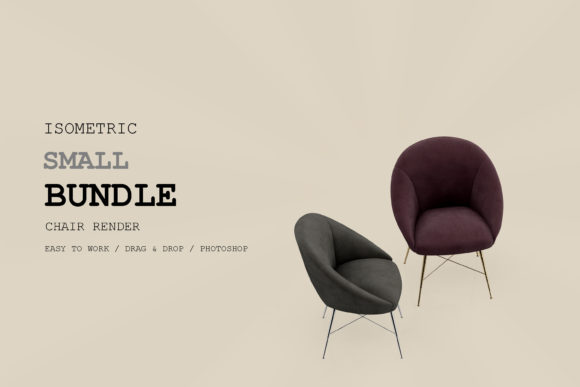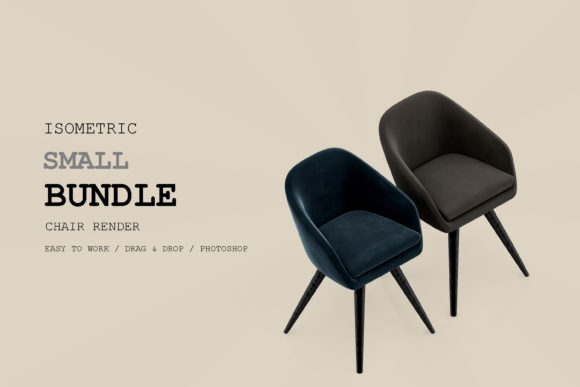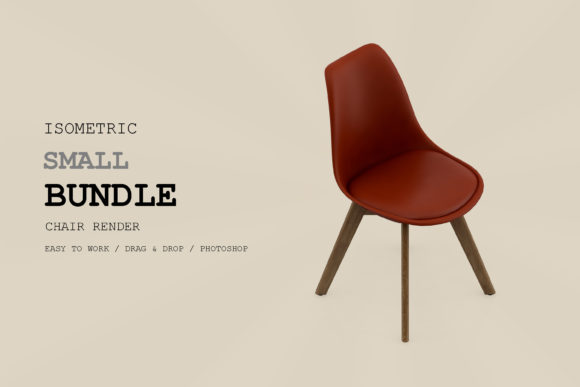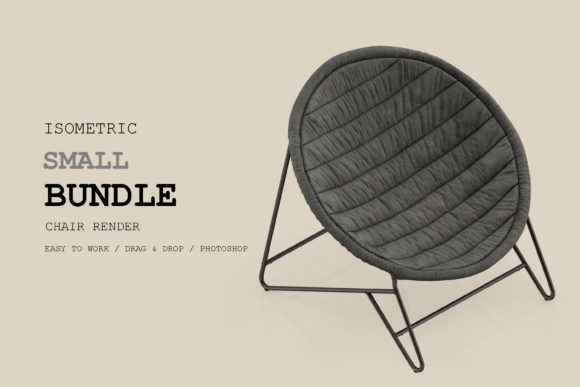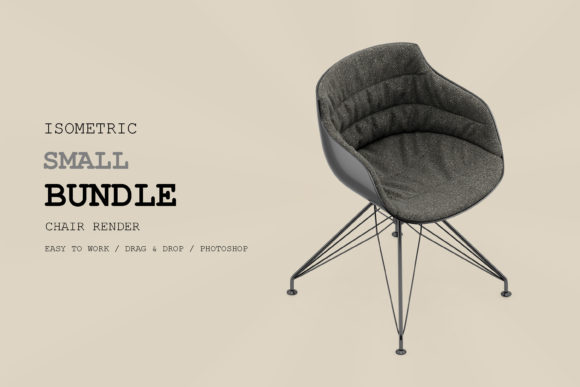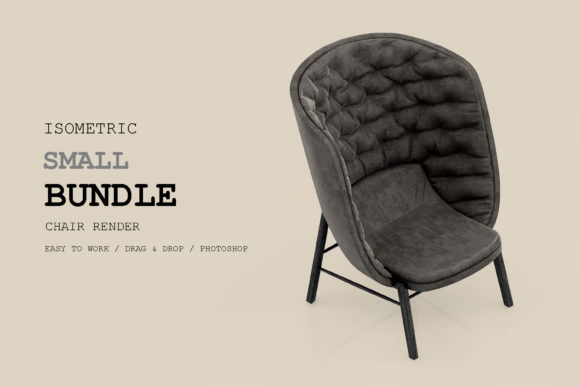
Isometric Chair 3D Render Pack 229
In the landscape of digital asset creation, efficiency is rarely about speed alone; it is about the reduction of friction between concept and execution. For designers, marketers, and architects, the time spent modeling simple geometric forms often outweighs the value those forms bring to a final composition. This is where specialized assets like the Isometric Chair 3D Render Pack 229 transition from being mere files to becoming critical infrastructure in a creative workflow. By providing high-fidelity, pre-rendered elements, this pack allows professionals to bypass the tedious stages of mesh modeling, UV unwrapping, and lighting setup, focusing instead on composition, narrative, and strategic placement.
The Architecture of Ready-Made Assets
Understanding the utility of Isometric Chair 3D Render Pack 229 requires looking at it not as a static image, but as a modular component designed for integration. The pack is defined by its technical specifications: separated backgrounds, high resolution, 300 DPI output, organized layers, and separated shadows. These are not just marketing buzzwords; they are functional attributes that dictate how the asset behaves within your software environment.
The inclusion of a separated background is the most significant factor in usability. In traditional workflows, isolating an object from its environment requires masking tools, which can be time-consuming and prone to edge artifacts. With a pre-separated layer, the chair exists independently of any context, allowing you to drop it into any scene—whether it is a minimalist white void or a complex architectural interior—without manual cleanup. This separation ensures that the asset remains versatile, adapting to various design languages without requiring post-production correction.
Furthermore, the organization of layers and the presence of separated shadows provide depth control. A flat image lacks dimensionality, but a render with a distinct shadow layer allows you to manipulate the perceived height and grounding of the object. You can adjust the opacity of the shadow to match the ambient light of your project, ensuring that the chair looks like it belongs in the space rather than floating above it. This level of control is essential for maintaining visual consistency across multi-page documents, website headers, or social media campaigns.
Integration into Professional Workflows
The true value of this asset emerges when it is integrated into specific professional contexts. For architects and interior designers, visualization is key. Presenting a floor plan or a room layout often requires furniture pieces to convey scale and function. Using Isometric Chair 3D Render Pack 229 allows these professionals to populate their designs quickly. Because the renders are at 300 DPI, they maintain crisp edges even when printed for client presentations or physical portfolios. The isometric perspective itself offers a unique advantage: it provides a clear view of the object’s dimensions and structure without the distortion of perspective lines, making it ideal for technical illustrations and catalog layouts.
For digital marketers and social media managers, the demand for fresh, engaging content is relentless. Static images of products or concepts need to stand out in crowded feeds. The clean, vector-like quality of high-resolution isometric renders translates well to both digital screens and print materials. When creating advertisements for e-commerce platforms, the separated background allows for easy compositing onto branded backgrounds or lifestyle imagery. The ability to reuse these assets across multiple campaigns reduces production costs and accelerates time-to-market. A marketer can create a series of posts featuring the same chair in different colors or settings simply by swapping out the background layer, maintaining brand consistency while varying the visual appeal.
Academic and Educational Applications
Educators and students often struggle with the technical barriers of creating professional-looking diagrams. Textbooks, lecture slides, and research papers require clear, unambiguous visuals to explain complex ideas. Isometric Chair 3D Render Pack 229 serves as a perfect tool for illustrating concepts in design theory, ergonomics, or spatial planning. The organized layers allow educators to break down the chair into its constituent parts if needed, or use the full render to demonstrate finished product aesthetics. For school projects, using such high-quality assets elevates the standard of work, allowing students to focus on their analytical arguments rather than struggling with basic rendering techniques.
Technical Compatibility and Preparation
To maximize the utility of Isometric Chair 3D Render Pack 229, understanding its technical requirements is crucial. The pack typically includes PNG files with transparency, which are compatible with almost all major graphic design software, including Adobe Photoshop, Illustrator, Affinity Designer, and Canva. However, successful integration depends on proper file management and preparation.
- File Organization: Before importing the assets into a project, ensure they are stored in a dedicated folder structure. Labeling files clearly (e.g., "Chair_Pack229_SepBg_300DPI.png") prevents confusion later in the workflow.
- Resolution Management: While the source files are 300 DPI, working in lower resolutions during the drafting phase can improve software performance. It is advisable to work at screen resolution (72–150 DPI) for web projects and only upscale to 300 DPI for final export or print.
- Shadow Adjustment: Experiment with the opacity and blur settings of the separated shadow layer. The default shadow may not match every lighting scenario. Adjusting these parameters ensures the chair feels grounded in your specific composition.
Compatibility extends beyond software. Consider the color profiles of your project. If you are designing for print, ensure your document is set to CMYK mode and that the RGB-based renders are converted appropriately to avoid color shifts. For web projects, sRGB is the standard, and the high-bit-depth nature of these renders usually handles this conversion smoothly without loss of quality.
Strategic Use Cases and Outcomes
The versatility of Isometric Chair 3D Render Pack 229 allows for a wide range of applications, each offering distinct outcomes.
Website Design and User Experience
In web design, isometric illustrations are popular for hero sections and feature highlights. They guide the user’s eye and add a sense of depth without overwhelming the interface. Using pre-made chairs from this pack allows web developers to insert high-quality visual anchors into their layouts quickly. The separated background ensures that the chair blends seamlessly with custom CSS gradients or photographic backgrounds, enhancing the overall aesthetic cohesion of the site.
Blog Content and Digital Publishing
Content creators benefit significantly from visual variety. Blog posts that include diverse, high-quality images tend to have higher engagement rates. Isometric renders offer a modern, clean look that appeals to tech-savvy and design-conscious audiences. By incorporating Isometric Chair 3D Render Pack 229 into blog headers or inline graphics, publishers can break up text and illustrate points effectively. The high resolution ensures that the images remain sharp on retina displays and when shared on social media platforms.
Advertisement and Branding
In advertising, clarity and impact are paramount. Whether creating a banner ad, a brochure, or a business card, the choice of imagery sets the tone. The professional finish of the renders in Pack 229 conveys reliability and attention to detail. Marketers can use these assets to create mockups of furniture catalogs, interior design proposals, or ergonomic office solutions. The ability to easily swap backgrounds means that the same chair can be marketed in a home office setting, a corporate boardroom, or a creative studio, targeting different customer segments with tailored messaging.
Long-Term Value and Asset Management
Investing in a render pack like Isometric Chair 3D Render Pack 229 is not just a one-time purchase; it is an addition to a long-term library of resources. As projects evolve, having a consistent set of assets helps maintain brand identity. Over time, you can build upon this foundation by adding complementary items from similar packs, creating a cohesive library of isometric elements. This systematic approach to asset management reduces decision fatigue and streamlines the creative process.
Moreover, the help file included with the pack is a valuable resource for troubleshooting and maximizing potential. It often contains tips on layer management, recommended software settings, and usage guidelines. Reading and applying these instructions ensures that you get the best possible results from the assets. It also helps in avoiding common pitfalls, such as incorrect scaling or improper blending modes, which can compromise the final output.
Conclusion on Practical Implementation
The integration of Isometric Chair 3D Render Pack 229 into your workflow represents a shift from creation to curation. It acknowledges that in many professional scenarios, the goal is not to model every element from scratch, but to assemble existing high-quality components into a compelling whole. By leveraging the separated backgrounds, high resolution, and organized layers of this pack, you gain the flexibility to adapt visuals to various contexts—from school projects to high-stakes commercial advertisements. The result is a more efficient, consistent, and polished output that meets the demands of modern digital communication. Whether you are an architect presenting a vision, a marketer launching a campaign, or a student completing a thesis, this asset provides the structural support needed to elevate your work without unnecessary complexity.