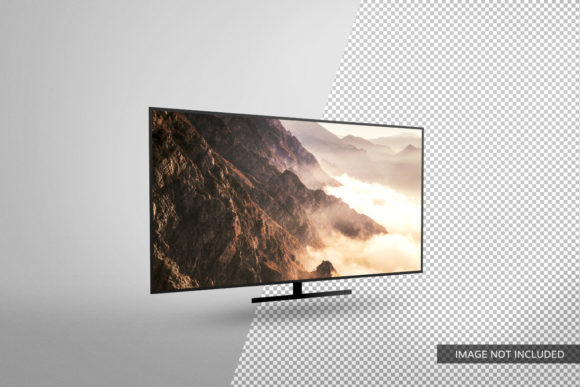
Monitor Mockup 3D: Elevate Your Brand with Realistic Presentation
In the digital age, how you present your work is just as important as the work itself. Whether you are a graphic designer showcasing a new app interface, a marketer pitching a rebranding strategy, or an educator preparing course materials, the visual context matters immensely. This is where a high-quality Monitor Mockup 3D becomes an indispensable tool. It transforms flat, two-dimensional designs into immersive, realistic scenarios that resonate with clients and audiences on a deeper level.
Many professionals underestimate the power of presentation. They assume that if the design is good, it will speak for itself. However, in a crowded marketplace, first impressions are formed in seconds. A poorly presented design can make even the most innovative concept look amateurish. Conversely, placing your artwork on a sleek, photorealistic monitor mockup instantly elevates its perceived value. It signals professionalism, attention to detail, and a commitment to quality. For your brand, this subtle shift can be the difference between a client saying "maybe later" and "let's sign the contract."
Why Realism Matters in Digital Presentations
The term "Monitor Mockup 3D" might sound technical, but its purpose is purely aesthetic and psychological. When viewers see a design displayed on a generic white background, their brains struggle to visualize the final product. They have to do the mental heavy lifting of imagining how it looks on a screen, in a room, or on a device. A realistic mockup removes that friction. It provides immediate context.
A great advantage to take your business to the next level is the ability to bridge the gap between imagination and reality. By using a realistic monitor mockup, you allow your audience to focus on the content of your design rather than trying to figure out how it fits into the real world. This clarity leads to faster decision-making and higher satisfaction rates. Clients feel more confident when they can clearly see what they are buying because they can visualize it in their own environment.
Common Pitfalls in Choosing and Using Mockups
While the benefits are clear, many users fall into traps when selecting and utilizing these assets. Understanding these common mistakes can save you time, money, and frustration.
Mistake 1: Prioritizing Quantity Over Quality
It is tempting to download free mockup packs from random websites to save budget. However, low-resolution images often result in pixelated screens or unrealistic lighting. If your client zooms in on the monitor and sees jagged edges or inconsistent shadows, your professionalism is questioned before they even look at your design. Always prioritize high-quality assets that offer sharp details and natural lighting effects.
Mistake 2: Ignoring Technical Specifications
Not all PSD files are created equal. Some beginners download a mockup only to find it is not editable, or worse, it uses outdated Photoshop features that crash their software. A critical feature to look for is the use of Smart Objects. This technology allows you to drag and drop your design onto the screen area, automatically conforming it to the perspective and curvature of the monitor. Without Smart Objects, you would have to manually warp and mask your image, which is tedious and prone to errors.
Mistake 3: Overcomplicating the Scene
Less is often more. A common error is cluttering the mockup with too many props—coffee cups, notebooks, plants, and other devices—that distract from the main subject. The goal is to highlight your design, not to create a complex still-life painting. Ensure the background and surrounding elements complement the monitor without stealing the spotlight. Clean, minimal setups usually convey a more modern and sophisticated brand image.
Evaluating the Right Tool for Your Needs
When evaluating a Monitor Mockup 3D, you need to look beyond the preview image. Here is a checklist to ensure you are making a smart investment:
- Layered and Grouped PSD Structure: Check if the file is well-organized. A messy layer structure makes editing difficult. Look for grouped layers for the monitor body, screen, stand, and background. This organization speeds up your workflow significantly.
- Resolution and Aspect Ratio: Ensure the mockup supports high resolutions (at least 4K) so it looks crisp on large displays. Also, verify that the aspect ratio matches your design needs (e.g., 16:9 for standard monitors, 16:10 for productivity-focused screens).
- Lighting and Shadows: High-quality mockups include realistic shadow layers. These add depth and ground the monitor in the scene. Without proper shadows, the monitor can look like it is floating, breaking the illusion of realism.
- Compatibility: Confirm that the mockup is compatible with your version of Adobe Photoshop. Most modern mockups require Photoshop CC 2018 or later, but some advanced features may need newer versions.
Maximizing Efficiency with Smart Editing
Once you have selected a high-quality, layered, and grouped PSD file, the editing process should be seamless. The beauty of a professional Monitor Mockup 3D lies in its ease of use. You do not need advanced photo manipulation skills to achieve stunning results.
Start by opening the PSD file in Photoshop. Locate the Smart Object layer labeled "Screen" or "Display." Double-click this thumbnail to open the embedded file. Paste your design here, save the changes, and close the tab. The mockup will automatically update, applying the correct perspective, blending modes, and effects. This non-destructive workflow allows you to experiment with different designs without risking damage to the original mockup file.
Furthermore, take advantage of the adjustable settings within the PSD. Many premium mockups include sliders for brightness, contrast, and even ambient light color. If your design has a dark theme, you might adjust the ambient lighting to match. If your design is vibrant, you can enhance the screen's saturation slightly to make it pop. These small tweaks can make a significant difference in the overall impact of the presentation.
Strategic Applications for Different Audiences
The versatility of a realistic monitor mockup extends across various professions. For freelancers and designers, it is essential for portfolio pieces and client presentations. It shows that you understand not just design, but also marketing and consumer psychology.
Entrepreneurs and startup founders can use these mockups for crowdfunding campaigns, investor decks, and landing pages. A visually appealing product shot increases conversion rates and builds trust with potential backers. Marketers and bloggers benefit by creating engaging social media graphics and blog headers that stand out in crowded feeds. Even educators can use them to create polished course materials or online tutorials that look professional and authoritative.
Final Thoughts on Making the Right Choice
Investing in a high-quality Monitor Mockup 3D is not just about buying a template; it is about investing in your brand's perception. By avoiding common pitfalls like low resolution, poor organization, and cluttered compositions, you ensure that your hard work receives the attention it deserves. Remember to check the technical specs, prioritize Smart Object functionality, and keep the presentation clean and focused.
Take the time to evaluate your options carefully. Look for resources that offer easy-to-edit, layered PSD files with realistic lighting and shadows. When you present your work in a professional, realistic context, you communicate confidence and competence. In a competitive landscape, that edge can be the key to taking your business to the next level. Choose wisely, edit efficiently, and let your designs shine in their best possible light.