Evaluating Isometric Chair 3D Render Pack 172 for Professional Design Workflows
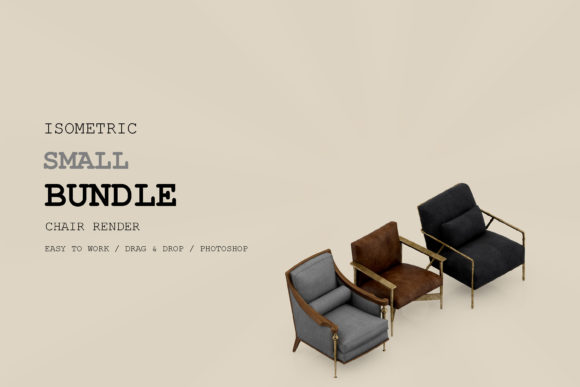
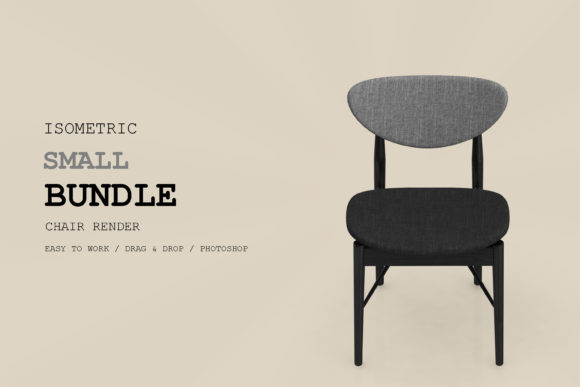
In the competitive landscape of digital design, visual clarity and technical precision are paramount. For designers, architects, and marketers seeking to present furniture or interior concepts without the distraction of perspective distortion, isometric projection remains a gold standard. Among the various assets available in the market, Isometric Chair 3D Render Pack 172 has emerged as a robust solution for professionals who require high-fidelity imagery that is both aesthetically pleasing and technically versatile. This article provides an in-depth analysis of this specific render pack, evaluating its features, potential applications, and how it stacks up against other common asset types.
Understanding the Core Features of Isometric Chair 3D Render Pack 172
To understand why this pack is suitable for your project, it is essential to look beyond the surface visuals and examine the underlying technical specifications. The pack is not merely a collection of static images; it is a structured resource designed for integration into complex workflows. The distinction lies in its organization and resolution capabilities.
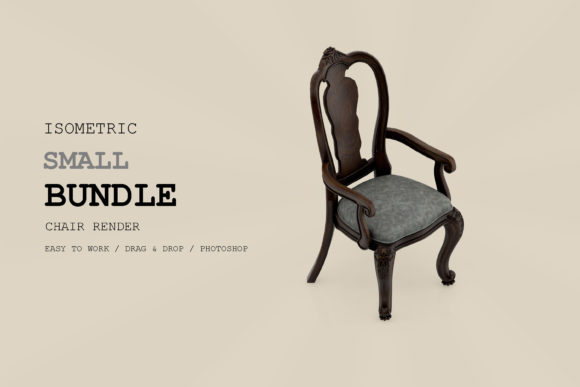
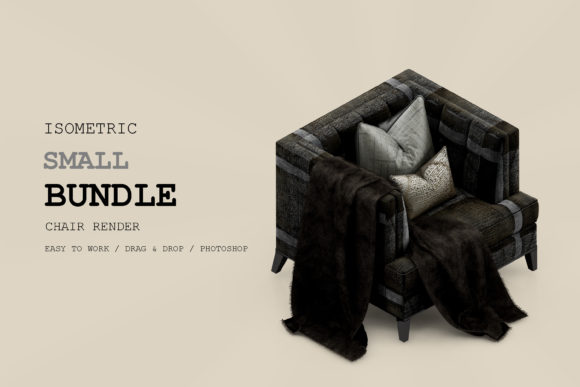
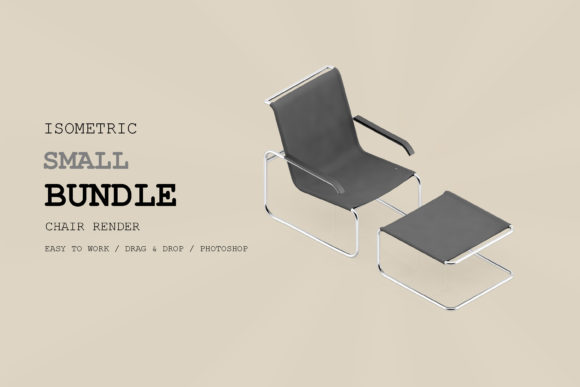
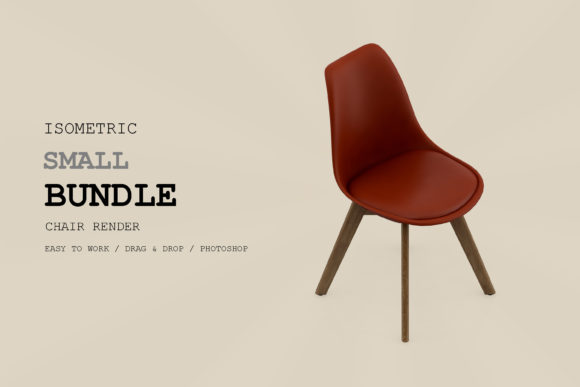
The most significant advantage of Isometric Chair 3D Render Pack 172 is its adherence to high-resolution standards. With a DPI (dots per inch) of 300, these renders meet the strict requirements for professional print media. Many online assets suffer from pixelation when scaled up for large-format printing, such as brochures, posters, or architectural presentations. This pack mitigates that risk, ensuring that every curve of the chair and texture of the upholstery remains crisp and clear at any size.
Furthermore, the inclusion of separated layers offers a level of flexibility that pre-composited images cannot match. In a typical workflow, designers often need to adjust lighting, swap backgrounds, or modify shadows to match a specific brand identity or environmental context. Because the layers are organized, users can isolate the chair from its environment with ease. This is particularly useful when creating composite scenes where multiple furniture pieces need to interact realistically within a single space.
The separated shadow feature is another critical component. Shadows ground objects in their environment, providing a sense of weight and realism. By having the shadow on a separate layer, designers have full control over opacity, blur, and color. This allows for seamless integration into different lighting conditions, whether the final design calls for a bright, airy showroom or a moody, atmospheric lounge setting.
Comparative Analysis: Isometric Renders vs. Photorealistic Perspective Shots
When selecting visual assets, designers often face a choice between isometric views and traditional perspective photography or rendering. While photorealistic shots offer a lifelike experience, they come with inherent limitations regarding composition and consistency. Isometric Chair 3D Render Pack 172 addresses several pain points associated with perspective-based imagery.
- Consistency Across Products: In e-commerce or catalog design, maintaining a consistent visual language is crucial. Perspective shots taken from different angles or using different lenses can create a disjointed user experience. Isometric views provide a uniform scale and angle across all products, making comparison easier for the viewer and creating a more cohesive gallery.
- Space Efficiency: Isometric projections allow for dense packing of information. Because there is no vanishing point consuming the center of the frame, designers can arrange multiple chairs or furniture sets in a grid-like structure without visual clutter. This makes the pack ideal for infographics, floor plans, or detailed specification sheets.
- Technical Accuracy: For architecture and interior design projects, isometric views often communicate dimensions and spatial relationships more clearly than perspective shots, which can distort proportions due to lens effects. The neutral viewpoint of the isometric style ensures that the product’s true form is presented.
However, tradeoffs exist. Isometric views may lack the emotional immersion of a wide-angle perspective shot, which can convey the "feel" of a room. Therefore, the choice depends on the primary goal: if the aim is to sell an atmosphere, perspective might be better; if the aim is to showcase product details, specs, or layout efficiency, Isometric Chair 3D Render Pack 172 is likely the superior choice.
Versatility in Application: Where Can You Use These Assets?
The utility of this render pack extends across a broad spectrum of industries and media formats. Its high resolution and organized structure make it adaptable to both digital and physical outputs. Below are key areas where this resource proves particularly valuable.
Architecture and Interior Design
Architects frequently use isometric illustrations to present proposals to clients who may not interpret traditional blueprints easily. Using Isometric Chair 3D Render Pack 172, designers can populate their 3D models or 2D layouts with realistic furniture elements. The separated background allows the chair to be placed directly onto custom floor plans or rendered environments without manual masking. This saves hours of post-production time in software like Photoshop or Illustrator.
Education and School Projects
In academic settings, clarity is key. Students presenting design projects benefit from the clean, uncluttered nature of isometric renders. The ability to separate layers allows students to experiment with different material finishes or colors without needing to re-render the entire 3D model. This iterative capability supports the learning process and encourages creative exploration within a structured framework.
Digital Marketing and Social Media
Social media platforms demand high-quality visuals that capture attention quickly. The sharp lines and balanced composition of isometric designs perform well on feeds where content is viewed on smaller screens. Advertisers can use these renders for carousel posts, story ads, or banner campaigns. The high DPI ensures that even when cropped or resized for mobile optimization, the image quality remains intact, preserving brand professionalism.
Print Projects and Publications
For magazines, catalogs, and brochures, the 300 DPI requirement is non-negotiable. Many free or low-cost internet assets fail this test. Isometric Chair 3D Render Pack 172 is specifically engineered to meet print industry standards. Whether you are designing a lookbook for a furniture brand or a section in a lifestyle magazine, these assets ensure that the final printed piece looks polished and authoritative.
Websites and Blogs
Web designers looking to enhance blog posts or product pages with illustrative elements will find this pack highly effective. The organized layers allow for web-specific optimizations, such as converting parts of the image into transparent PNGs for overlay effects or interactive hover states. This adds a layer of interactivity that static JPEGs cannot provide, enhancing user engagement.
Decision Factors: When to Choose This Pack
Selecting the right asset involves matching the tool to the task. Isometric Chair 3D Render Pack 172 is best suited for users who prioritize workflow efficiency and technical precision. If you are a designer who frequently needs to composite furniture into existing scenes, the separated layers and shadows will significantly reduce your editing time. Similarly, if your output includes high-quality print materials, the 300 DPI resolution is a critical deciding factor.
Conversely, if your project requires dynamic, action-oriented imagery—such as a person sitting in the chair in a natural pose—you might find this pack too static. Isometric renders are typically posed and stylized, focusing on the object itself rather than human interaction. Additionally, if you are working strictly on low-resolution web banners where file size is the only concern, the high resolution of this pack might result in unnecessarily large files unless optimized correctly.
The availability of a help file is also a notable feature. For beginners or those less familiar with advanced compositing techniques, guidance on how to utilize the layers and shadows effectively can lower the barrier to entry. This support element adds value, ensuring that users can extract maximum benefit from the asset without needing extensive external training.
Conclusion on Suitability and Value
In summary, Isometric Chair 3D Render Pack 172 represents a thoughtful intersection of aesthetic appeal and technical utility. It caters to the needs of modern designers who work across multiple mediums, from digital advertising to high-end print. By offering separated layers, high resolution, and organized structures, it removes common friction points in the design process.
While it may not replace the need for immersive perspective photography in all contexts, it excels in scenarios requiring clarity, consistency, and scalability. For professionals in architecture, education, marketing, and web design, this pack serves as a reliable, versatile resource that enhances the quality of visual communication. When evaluating options, consider your specific output requirements and workflow needs; if precision and adaptability are priorities, this pack stands out as a strong candidate.